





















Water management is now one of the biggest sustainability priorities for Indian businesses. Yet there is a major difference between companies that simply meet environmental compliance standards and those that actively restore water resources to communities and ecosystems.
DS Group takes a holistic approach to water management, focusing on responsible water use, wastewater treatment, compliance with discharge norms, and water replenishment. The Group's efforts are driven through two key initiatives:
First up is DS Group’s water stewardship programme that goes beyond operational efficiency. The group is certified Water Positive by the GRIHA Council, with a water positivity index of 1.8 across 30 locations in India. This means DS Group replenishes 1.8 units of water for every unit consumed in operations. The programme spans 6 states and includes watershed development, rainwater harvesting, groundwater recharge, and spring restoration projects designed around local environmental conditions and community needs.
The programme has also received national recognition. DS Group won the National Water Award 2020 from the Ministry of Jal Shakti for its Water Economic Zone project in Rajasthan. Alongside this, the company has completed an enterprise-wide Double Materiality Assessment (DMA) for FY 2024–25 and is also a member of the Resource Efficiency and Circular Economy Industry Coalition (RECEIC), strengthening its sustainability governance framework.
As one of the leading Indian companies that has notable water conservation CSR programmes, DS Group offers one of the most transparently documented examples in the country. More details are available through the DS Group CSR Overview & Initiatives and the DS Group’s Water Conservation Programmes.
A water positivity index measures the ratio of water replenished through conservation interventions to water consumed by business operations. An index above 1.0 means a company replenishes more water than it withdraws, making it water positive.
DS Group’s certified index of 1.8 means the organisation replenishes 1.8 litres of water for every litre consumed across its operational footprint. Since 1.0 is considered the neutral threshold, an index of 1.8 means the group replenishes 80% more water than it uses. This distinction is important because many FMCG companies focus primarily on efficiency metrics, such as reducing water use per kilogram of production.
While efficiency is valuable, it does not necessarily mean ecosystems or local watersheds are being restored. DS Group’s approach measures net replenishment instead of only reduction. Another important factor is scale. The 1.8 index applies across 30 locations in India, including manufacturing and operational sites, rather than being restricted to a single facility. This gives the certification far greater significance.
DS Group’s Water Positive status is certified by the GRIHA Council, India’s national green building and sustainability rating agency developed by TERI and the Ministry of New and Renewable Energy. This is important because the certification is independently verified rather than self-declared. The process requires documented operational water consumption data, evidence of water harvesting and replenishment, and verification of watershed impact.
In practical terms, this means a third-party technical assessment backs DS Group’s 1.8 water positivity index. The certification distinguishes the programme from sustainability claims that are not independently validated.
The company also participates in wider sustainability frameworks through its membership with RECEIC. More information about the company’s sustainability credentials is available through DS Group's Sustainability Certifications.
The Water Economic Zone, or WEZ, is one of the most recognised components of DS Group’s water conservation programme. It is a watershed development model that combines water harvesting with livelihood support and agricultural sustainability.
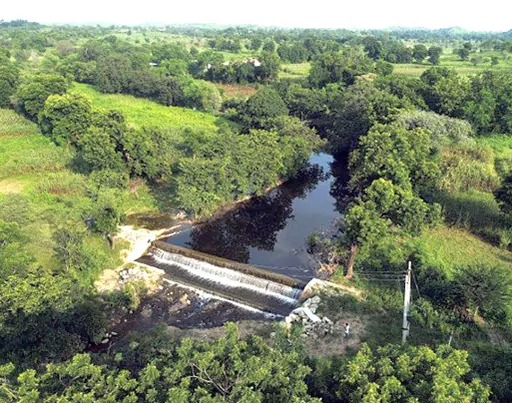
The project includes interventions such as construction and renovation of existing water harvesting strcutures such as Ponds, checkdams, percolation tanks, recharge shafts, and rainwater harvesting structures. However, the model is designed to go beyond water storage alone. The aim is to strengthen agricultural productivity, improve local livelihoods, and create long term water resilience within communities.
The WEZ programme in Udaipur, Rajasthan, operates in an area historically affected by water scarcity and rain-dependent agriculture. Many communities in the region face seasonal water stress and economic vulnerability linked directly to groundwater depletion.
DS Group received the National Water Award 2020 from the Ministry of Jal Shakti for this programme. The award is considered India’s highest government recognition for water conservation initiatives. The company has also published impact assessment reports for the project, adding another layer of transparency that is still uncommon among corporate CSR programmes in India.
Want to learn more? You can access details through DS Group's Rajasthan Water Conservation Projects, DS Group's Impact Assessment of “Creation of Water Economic Zone” in Udaipur, Rajasthan, and the Impact Assessment of Creation of Water Economic Zones through Integrated Watershed Development in Kurabad, Udaipur, Rajasthan.
Many water conservation initiatives focus only on capturing water. The WEZ model takes a broader systems approach. Water conservation supports agriculture, agriculture supports livelihoods, and stronger livelihoods help communities become more resilient to environmental stress.
This integrated structure is one of the reasons the programme received government recognition. The WEZ initiative is not only about replenishment metrics. It contributes to local economic stability and community resilience in water-stressed regions.
The programme particularly benefits agricultural and marginalised communities that depend heavily on rainfall and local groundwater resources.
DS Group’s water conservation CSR initiatives operate across Rajasthan, Madhya Pradesh, Uttar Pradesh, Uttarakhand, Himachal Pradesh, and Gujarat. Each geography has different ecological conditions, requiring different intervention models.
Rajasthan represents the company’s most extensively documented water conservation geography. The state faces some of the highest levels of water stress in India, especially in districts dependent on monsoon rainfall.
DS Group’s work here focuses on integrated watershed development through Water Economic Zones, checkdams, groundwater recharge structures, and percolation systems. The Rajasthan programme also won the National Water Award 2020.
More information is available through DS Group’s Rajasthan Water Conservation Projects.
In Madhya Pradesh and Uttar Pradesh, the company combines water conservation with livelihood enhancement. Projects focus on community water harvesting, agricultural support, and groundwater recharge.
These initiatives are designed to strengthen water security alongside farming-based livelihoods. DS Group has also published rainwater harvesting impact assessments connected to these programmes.
Want to learn more? You can explore DS Group’s Madhya Pradesh Water Conservation Programs, Uttarakhand Water Conservation Projects, and the Impact Assessment Report: April 2025.
The Himalayan states represent a different type of intervention focused on spring recharging.
In Uttarakhand, DS Group has documented work in the Nainital district to restore springs that serve as the primary drinking water source for local hill communities. These interventions include plantation drives, groundwater infiltration measures, and watershed restoration activities.
The Himalayan focus also aligns with the company’s broader water stewardship approach because Catch Natural Spring Water is sourced from the Himalayan regions. The conservation effort, therefore, supports both community water security and watershed sustainability.
To learn more, you can access details through Uttarakhand Water Conservation Projects, Himachal Pradesh Water Conservation Projects, and the Impact Assessment Report - “Recharging Spring for Water Security” in Nainital District, Uttarakhand.
In Gujarat, the programme focuses on Kutch, one of India’s driest regions. Interventions include household and community-level rainwater harvesting systems that support domestic water storage during dry periods.
The programme benefits rural communities where water infrastructure is limited, and rainwater retention becomes essential for year-round water availability. More details can be found through Water Conservation Initiatives in Gujarat and the Impact Assessment Report (Dec 2025).
DS Group’s sustainability efforts are not limited to external CSR projects. The organisation has also focused on reducing the environmental footprint of its own infrastructure.
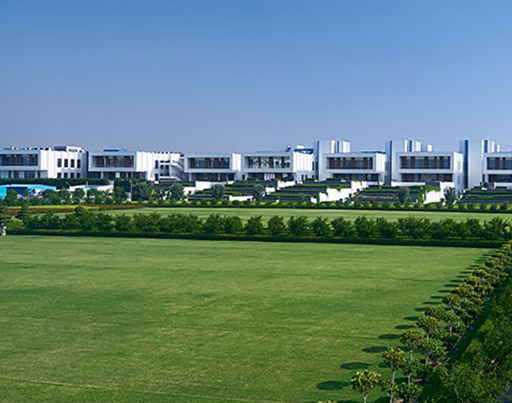
The company headquarters in Noida holds both LEED Platinum certification under USGBC v4 O and M and LEED Zero Carbon certification. These certifications include stringent standards related to water efficiency, water management, and energy performance.
Together, the operational certifications and the GRIHA-certified Water Positive status create a dual sustainability structure. One focuses on efficient resource use inside the company’s own facilities, while the other focuses on replenishment and watershed restoration outside operational boundaries.
DS Group has also completed an enterprise-wide Double Materiality Assessment (DMA) and ESG Data Governance framework for FY 2024 to 25. This process evaluates both the environmental risks affecting the company and the impact of the company’s activities on communities and ecosystems.
The organisation publishes CSR policies, impact assessments, and annual disclosures on its website, adding transparency that is still relatively uncommon among privately held Indian FMCG companies.
You can explore DS Group LEED Platinum Certification & Green Carbon, DS Group’s CSR Policy FY 2024 to 25, and DS Group’s Impact Assessment.
Several Indian companies have invested in water conservation initiatives. However, DS Group occupies a distinctive position within this landscape.
The company combines a third-party verified water positivity index, a National Water Award from the Government of India, and publicly available state-specific impact assessments. This combination is unusual, particularly for a privately held company without mandatory public sustainability disclosure obligations. DS Group’s programme is one of the most transparently documented and independently verified examples of corporate water stewardship in India.
There is a clear difference between compliance-driven sustainability and genuine stewardship. DS Group’s water conservation programme sits firmly in the stewardship category. The company has pursued independent GRIHA certification, published impact assessments, completed advanced ESG governance processes, and implemented geographically specific interventions across six states. It has also received national recognition through the National Water Award 2020.
DS Group’s water stewardship programme, certified at a 1.8 water positivity index across 30 locations and supported by published impact assessments, represents one of India’s most transparently documented corporate water conservation initiatives. Readers can access programme details, state-specific pages, and impact reports through the DS Group’s Water Conservation Programmes and DS Group’s CSR Impact & Sustainable Assessments.
DS Group is certified water positive by the GRIHA Council, India’s national sustainability rating agency. The group’s water positivity index is 1.8 across 30 operational locations in India. This means DS Group replenishes 1.8 units of water for every unit consumed in operations. The company also received the National Water Award 2020 from the Ministry of Jal Shakti for its Water Economic Zone programme.
DS Group operates water conservation programmes across Rajasthan, Madhya Pradesh, Uttar Pradesh, Himachal Pradesh, Uttarakhand, and Gujarat. Its initiatives include watershed development, Water Economic Zones (WEZ), rainwater harvesting, spring recharging, and groundwater recharge projects. The programmes are implemented through grassroots NGO partnerships and focus on improving water security for communities in water-stressed and agriculturally dependent regions.
DS Group’s water positivity index is 1.8 and is certified by the GRIHA Council. A water positivity index measures how much water a company replenishes compared to how much it consumes. An index above 1.0 means the company returns more water than it withdraws. DS Group’s score of 1.8 means it replenishes 80 per cent more water than it uses across its operational footprint.
DS Group’s water conservation initiatives benefit communities across six Indian states, including Rajasthan, Madhya Pradesh, Uttar Pradesh, Uttarakhand, Himachal Pradesh, and Gujarat. The programmes primarily support water-stressed, farming-dependent, and marginalised communities. Key beneficiaries include agricultural households, tribal populations, and rural communities that rely heavily on groundwater, springs, and seasonal rainfall for their daily water needs and livelihoods.
The Water Economic Zone, or WEZ, is DS Group’s watershed conservation model implemented in Udaipur, Rajasthan. The programme combines rainwater harvesting, groundwater recharge, checkdams, and livelihood-linked agricultural support. It won the National Water Award 2020 from the Ministry of Jal Shakti, which is India’s highest government recognition for water conservation. DS Group has also published impact assessments for the WEZ project on its website.
DS Group publishes its CSR policy documents, annual disclosures, and programme-specific impact assessments on its official website. Readers can access reports covering Water Economic Zones in Rajasthan, spring recharging in Uttarakhand, rainwater harvesting projects, and other CSR initiatives. Useful resources include DS Group’s CSR Impact & Sustainable Assessments, DS Group CSR Policy, and DS Group’s List of Projects.